Reduce eye strain at night by fixing your desk lighting, positioning, and setup
—
it’s easier than you think.
Let’s be honest.
Working at night hits differently.
Your eyes feel heavier. Your focus drops. And somehow, even your screen feels brighter than usual.
💡 Simple Ways to Reduce Eye Strain at Night
If you want to reduce eye strain at night, small changes can make a big difference.
✔ Try these quick fixes:
- Lower your screen brightness
- Use indirect lighting instead of direct light
- Keep your room slightly illuminated
- Adjust your light angle to avoid glare
👉 These simple adjustments can help you reduce eye strain at night almost immediately.
🧠 Why Lighting Matters More at Night
To reduce eye strain at night, your lighting setup must support your eyes.
At night, your eyes are more sensitive to contrast and glare.
- Bright screen + dark room = eye fatigue
- Poor lighting = constant strain
👉 That’s why the best way to reduce eye strain at night is to balance your lighting environment.
That’s not just fatigue
it’s your lighting setup.
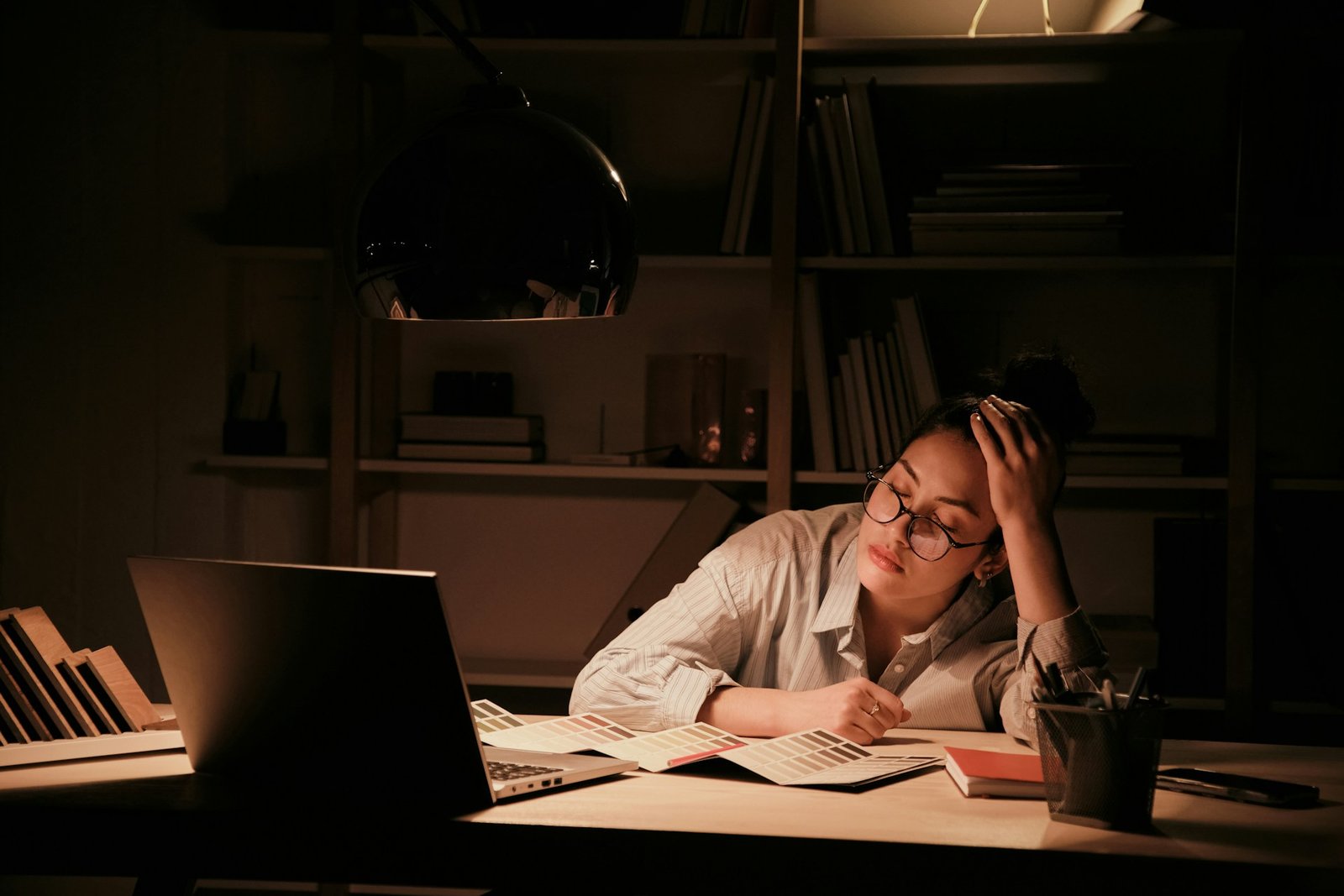
😵 Why Your Eyes Hurt More at Night
At night, your environment changes:
- Less ambient light
- Higher screen contrast
- More direct glare
👉 Your eyes have to work harder to adapt.
❌ The Biggest Mistake People Make
Most people think:
👉 “I just need a brighter lamp”
But that’s wrong.
The real problem:
- Light direction ❌
- Glare ❌
- Contrast imbalance ❌
✅ The 3-Step Fix
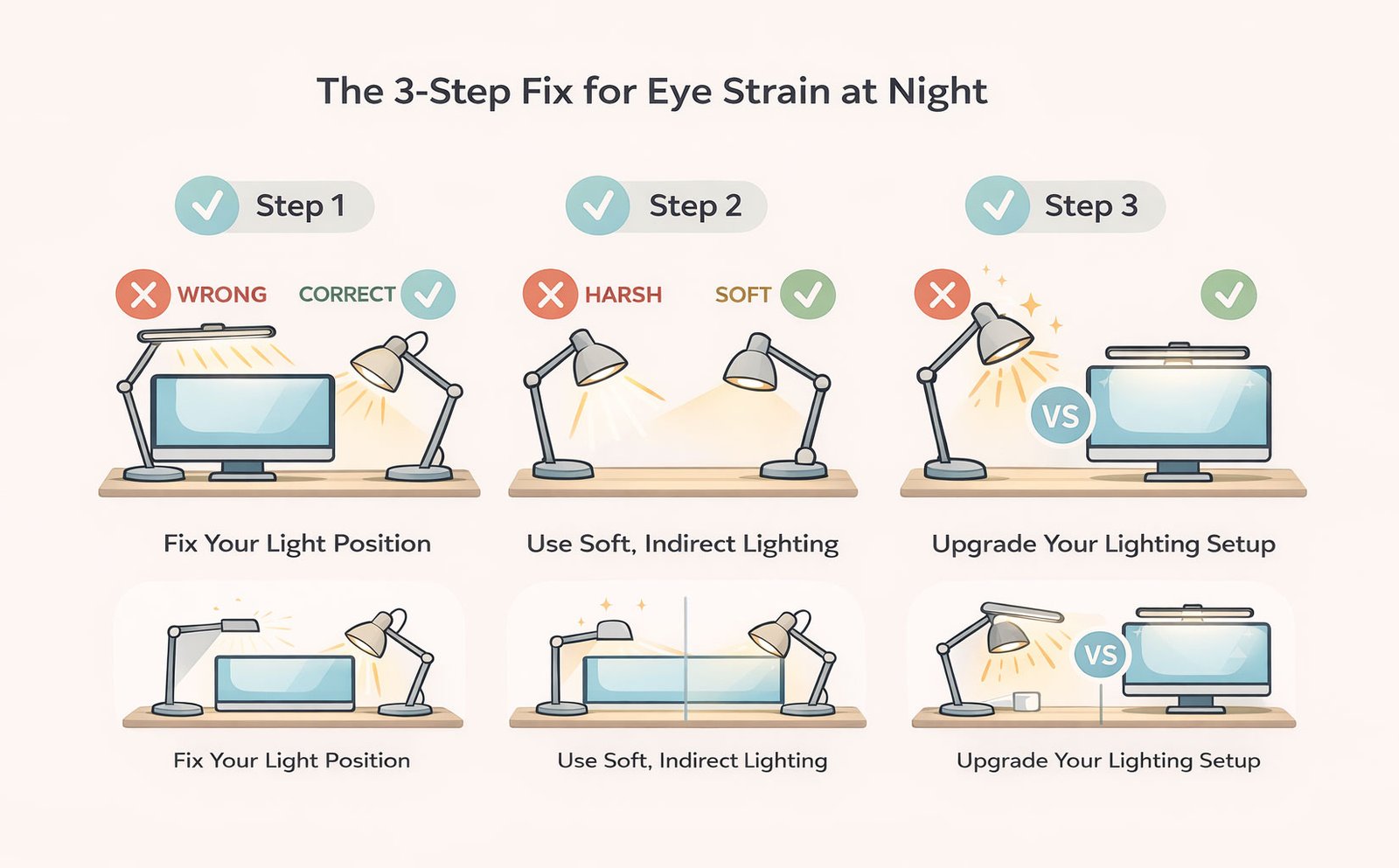
Keep the light angled toward your desk surface.
👉 Proper positioning alone can instantly reduce eye strain.
Soft, diffused light creates a more comfortable environment.
👉 Your goal is balance, not brightness.
Monitor-mounted lighting distributes light evenly.
👉 A simple upgrade can completely change your night work experience.
💡 Best Lighting Setup for Night Work
Creating the right environment is just as important as choosing the right lamp.
A well-balanced desk lighting setup should include both task lighting and ambient lighting.
✔ Ideal setup includes:
- A soft desk lamp or monitor light bar
- Low ambient background lighting
- Proper light positioning to avoid glare
👉 When you reduce eye strain at night, you’ll notice better focus and less fatigue almost immediately.
⚠️ Signs Your Lighting Setup Is Causing Eye Strain
You might not realize your lighting is the problem.
Common signs:
- Dry or irritated eyes
- Headaches after short work sessions
- Blurry vision at night
- Difficulty focusing
👉 Fixing your lighting setup can solve most of these issues quickly.
What Actually Works
At this point, you have two options:
Option 1:
Traditional Desk Lamp
- Good for general lighting
- Takes up space
- Can create glare
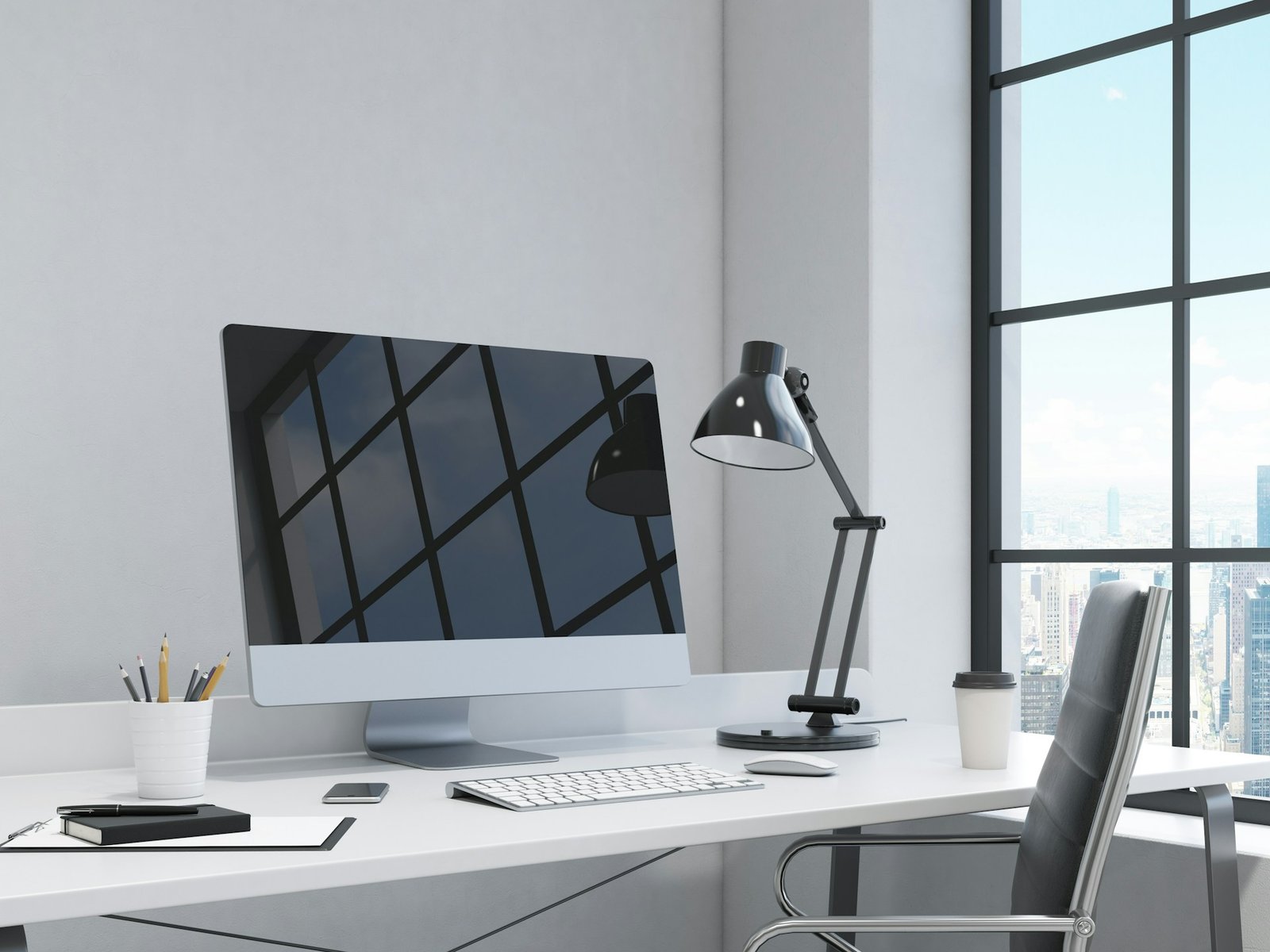
Option 2:
Monitor Light Bar (Recommended)
- No glare
- Saves desk space
- Even light distribution
👉 This is why more people are switching.
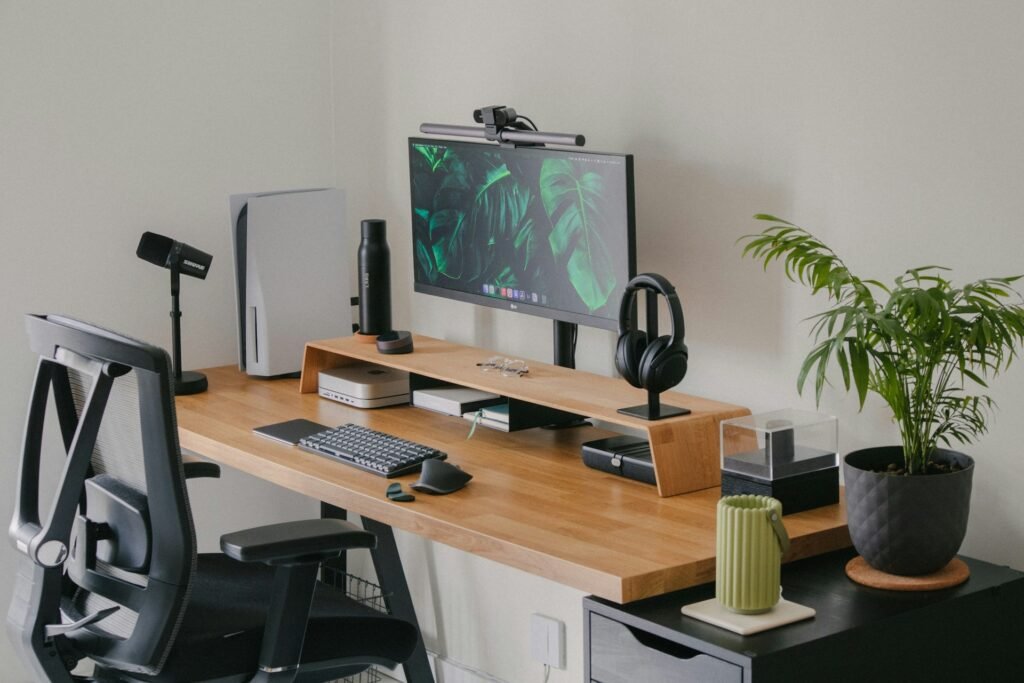
💡 Quick Upgrade Tip
Switching to a monitor light bar can instantly reduce eye strain at night.
👉 Check Options on Amazon
🧠 Pro Tips for Night Work Setup
- Lower screen brightness
- Use warm lighting (4000K 이하)
- Keep background slightly lit
👉 Small changes = big difference
💬 Final Thoughts
Eye strain at night isn’t just about working too long.
👉 It’s about how your environment is set up.
Fix your lighting, and everything changes:
- Less fatigue
- Better focus
- More comfortable workflow
🔗 Related Guides You Should Read
If you’re choosing between lighting types, this guide on desk lamp vs monitor light bar explains which one is better for reducing eye strain.
For compact setups, check out best monitor light bar for small desk to save space while improving lighting.
And if you prefer traditional lighting, explore best desk lamp for night work for eye-friendly desk lamp options.